
Welcome back to our series on Directional Rotation! In Part 1, we broke down the core definition of Directional Rotation, the energy flow, and the importance of bracing at contact. Now it's time to talk about what happens next, staying closed.
Staying closed is about keeping that energy aimed directly at the pitcher for as long as possible. It's the difference between a laser and a flashlight. One is focused and powerful. The other? Scattered everywhere.
Let's dig into how closed stances and striding closed keep your athlete's swing directional, powerful, and on plane.
What Does "Staying Closed" Actually Mean?
When we say "stay closed," we're talking about keeping the front side, your front hip, front shoulder, and front knee, pointed at the pitcher during the load and stride phases. It's not about being stiff or robotic. It's about controlled tension.
Think of it like drawing a bow. You pull back (load), you aim (stay closed), then you release (rotate). If you open too early, your arrow flies sideways. Same thing in hitting.
Opening too early is what we call "spinning off the ball." The front side flies open before the hands have a chance to get to contact. The barrel sweeps around the zone instead of driving through it. And when your athlete's timing is off? Forget about it. They're toast.
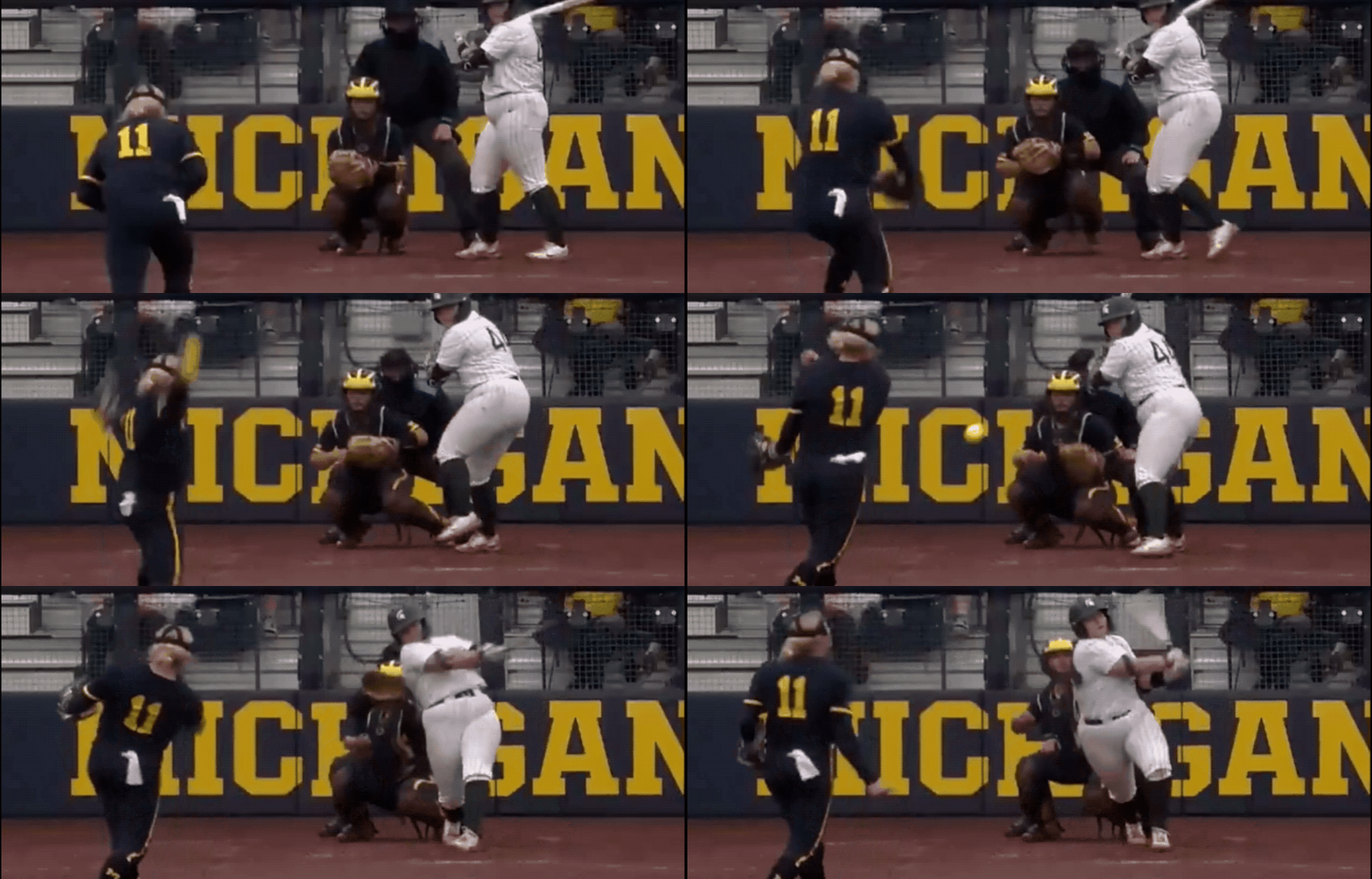
Why Closed Stances Set You Up for Success
A closed stance doesn't mean you're squared up to third base (or first, for lefties). It means your feet, hips, and shoulders are angled slightly toward home plate, or at minimum, not flying open prematurely during your stride.
Here's why this matters:
Direction equals power. When your front side stays closed longer, your body is forced to rotate into the ball, not around it. That means more energy is transferred from your lower half, up through your core, and into the barrel. Energy that could've leaked out sideways is now focused on the ball.
You stay on-plane longer. When you open early, your bat path gets steep or sweepy. Staying closed keeps the barrel in the zone longer, giving your athlete a better chance to make contact, even when they're fooled or late.
It protects your back side. This one's huge. If your front side flies open, your back hip has to overwork to compensate. That's how guys and girls end up with lower back issues or lose their power as the season drags on. Staying closed keeps your body balanced and moving efficiently.
Striding Closed: The Key to Maintaining Direction
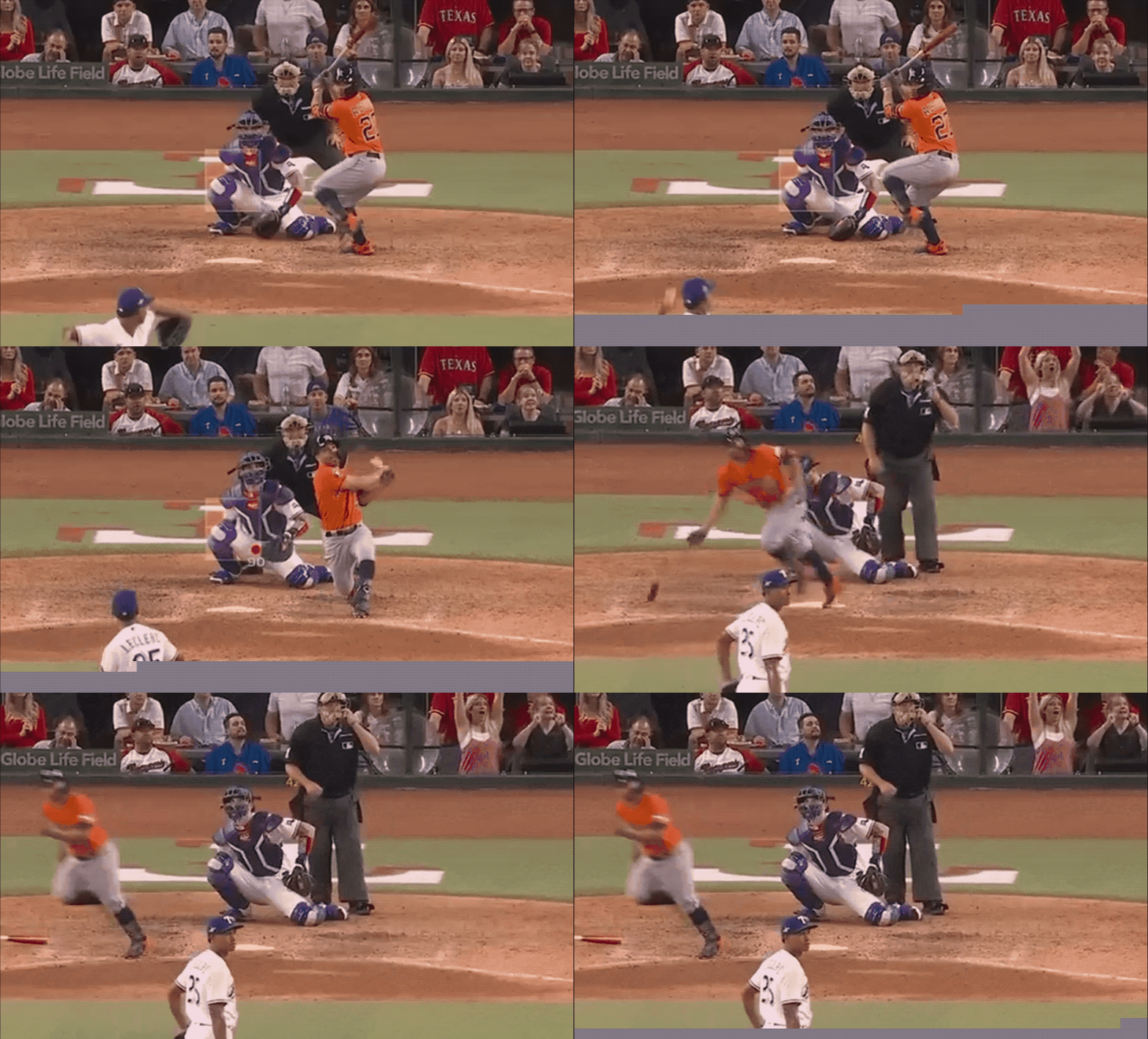
Now let's talk about the stride. This is where a lot of hitters lose direction without even realizing it.
Your stride foot should land in a position that keeps the front side closed just a beat longer. Not forever, just long enough to let the hands catch up and the lower half start its rotation.
Here's the checkpoint: When your front foot lands, your front knee, hip, and shoulder should still be pointed at the pitcher (or slightly closed). If they're already flying open on the stride, you're leaking energy before contact even happens.
Some of the best hitters in the game stride slightly closed or neutral from an open stance. It gives them room to explode rotationally without spinning off early. And when they do open up? It's violent. It's explosive. It's on purpose.
That's the difference between spinning and rotating.
Energy Flow/Sequence: A Quick Reminder
Let’s keep the same definition from Part 1 so everything stays connected:
Energy Flow/Sequence = Upper → Ground → Barrel.
Your upper body creates the load (intent + tension), you send it into the ground during the stride into landing, and then the ground gives it back so the barrel can turn fast and on time.
Staying closed and striding closed protects that flow. If you open early, energy leaks before it ever gets to the ground—so there’s less to return to the barrel.
When you stay closed and you brace, you keep the direction and the sequence: Upper → Ground → Barrel—clean, powerful, repeatable.
Brace at Contact: Lock It In and Deliver the Barrel
Here's the moment that matters most: contact.
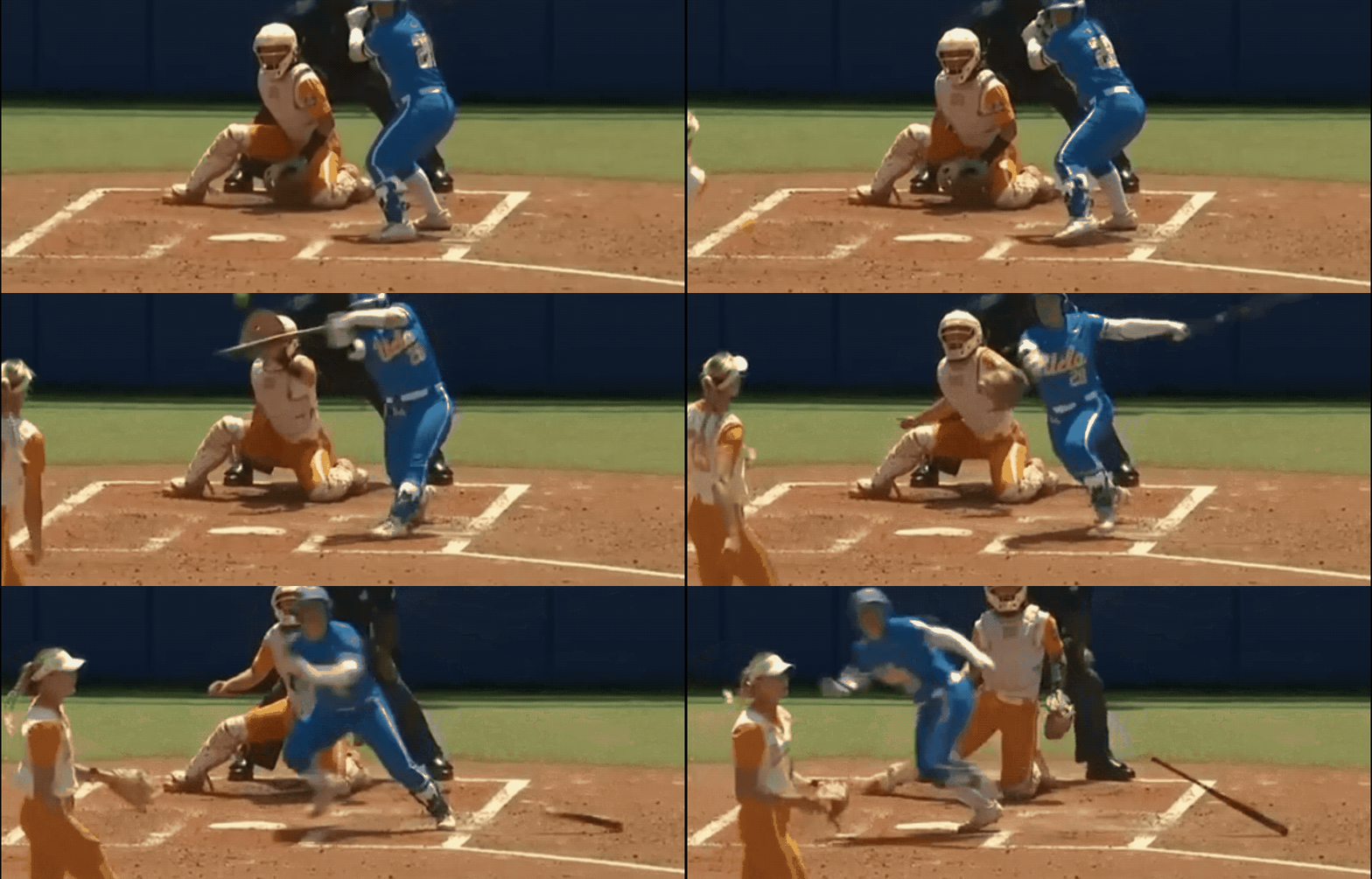
At contact, your front side should brace. That means your front leg firms up, your front hip stops (or slows dramatically), and your upper body rotates against that resistance. This is where the magic happens. This is where bat speed comes from.
This is also where your Energy Flow (Upper → Ground → Barrel) gets cashed in. When you brace, the ground has something solid to push against—so the barrel gets the payoff.
If your front side keeps drifting or collapses, you lose leverage. The barrel slows down. Exit velo drops. But when you brace? The energy you've been building since your load explodes into the ball.
Think of it like a catapult. The base is locked in. The arm whips around it. All the force transfers to the projectile. That's what your swing should feel like.
We work on this every day at R2 Training, whether you're a 10U player just learning to load or a high school athlete chasing 90+ exit velo. The details change, but the principle stays the same: direction, rotation, and bracing at contact.
Common Mistakes We See (and How to Fix Them)
Let's keep it real. Staying closed isn't easy. Here are a few things we see all the time in baseball training Indianapolis sessions and softball training Indianapolis programs:
The front foot steps open. This is the biggest leak most times, but nothing is an absolute. If your stride foot lands pointing toward the SS (or worse, toward the pull side), you're already in trouble. Cues: Stride to the middle of the plate or slightly closed. Back away from the plate. Often times stepping out is a product of trying to find space not being afraid of the ball.
The front shoulder flies open early. This usually happens when a hitter is anxious or has a bad flow or sequence. Cues: keep the front shoulder closed until your hands start forward. Take your front shoulder to your ear. Swing more with your upper body (from your chest), less from your hips. Land first, then swing.
No brace at contact. The front leg stays soft, the hips keep sliding, and the barrel never gets on-plane. Cue: firm up that front side. Feel the ground push back. Get forward. You can't brace if there's no weight in your front leg to anchor into the ground.
These are mechanical issues, but they're also timing issues. And timing can be trained.
How This Sets Up Part 3: Mastering Your Finish & The Scissor Kick
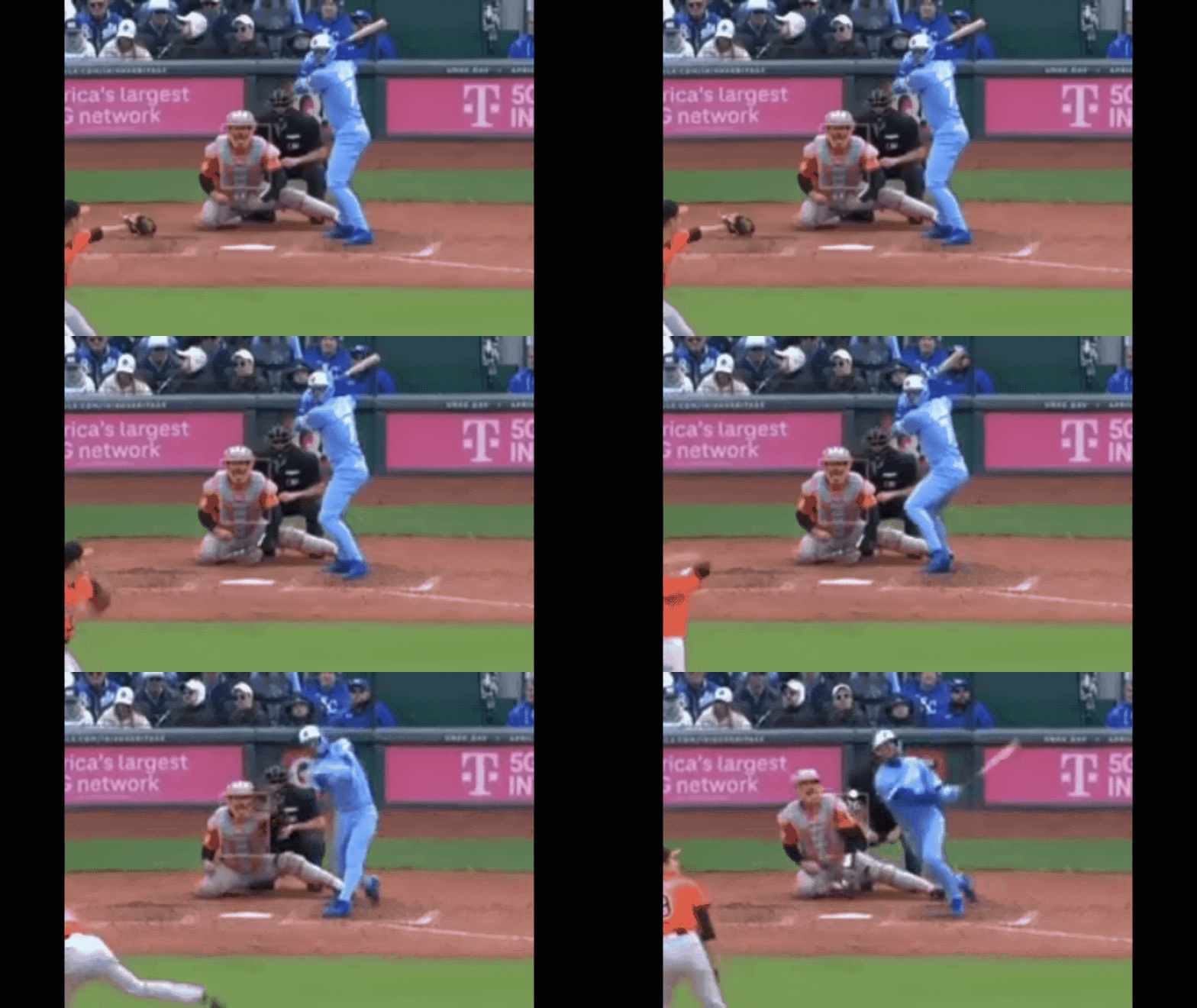
Alright, here's where we're headed next. You’ve stayed closed through the stride, kept your direction, protected your Energy Flow/Sequence (Upper → Ground → Barrel), and you’ve learned why bracing at contact is the moment that turns that buildup into real barrel speed.
Now what?
In Part 3, we’re going to get intentional about Mastering Your Finish & The Scissor Kick—and how different finish types (like recoils, trout steps, and one-hand finishes) can show you what your athlete is doing well, and what’s breaking down.
Because the finish isn’t just “after” contact—it’s a window into whether you stayed directional and braced the right way.