
Directional Rotation Part 1: Defining the Flow & The Brace
Directional Rotation is simple (and it’s a game-changer): it’s intentionally stopping rotation at contact so you can deliver the barrel through the ball—instead of spinning and cutting across it.
If you’ve ever watched your athlete “rotate hard” but still get weak contact, rollovers, or a lot of foul-side misses, this is usually why. They’re turning… but they’re not *bracing*. Directional Rotation gives all that rotation a purpose.
Welcome to Part 1 of our Directional Rotation Series. This one is all about the two fundamentals that make it work: the flow (where the energy actually travels) and the brace (how much energy can you capture).
What Is Directional Rotation, Anyway?
Directional Rotation is rotation with an on-purpose “stop”. Your athlete is turning fast, yes—but they’re also bracing at contact so the barrel keeps traveling through the ball.
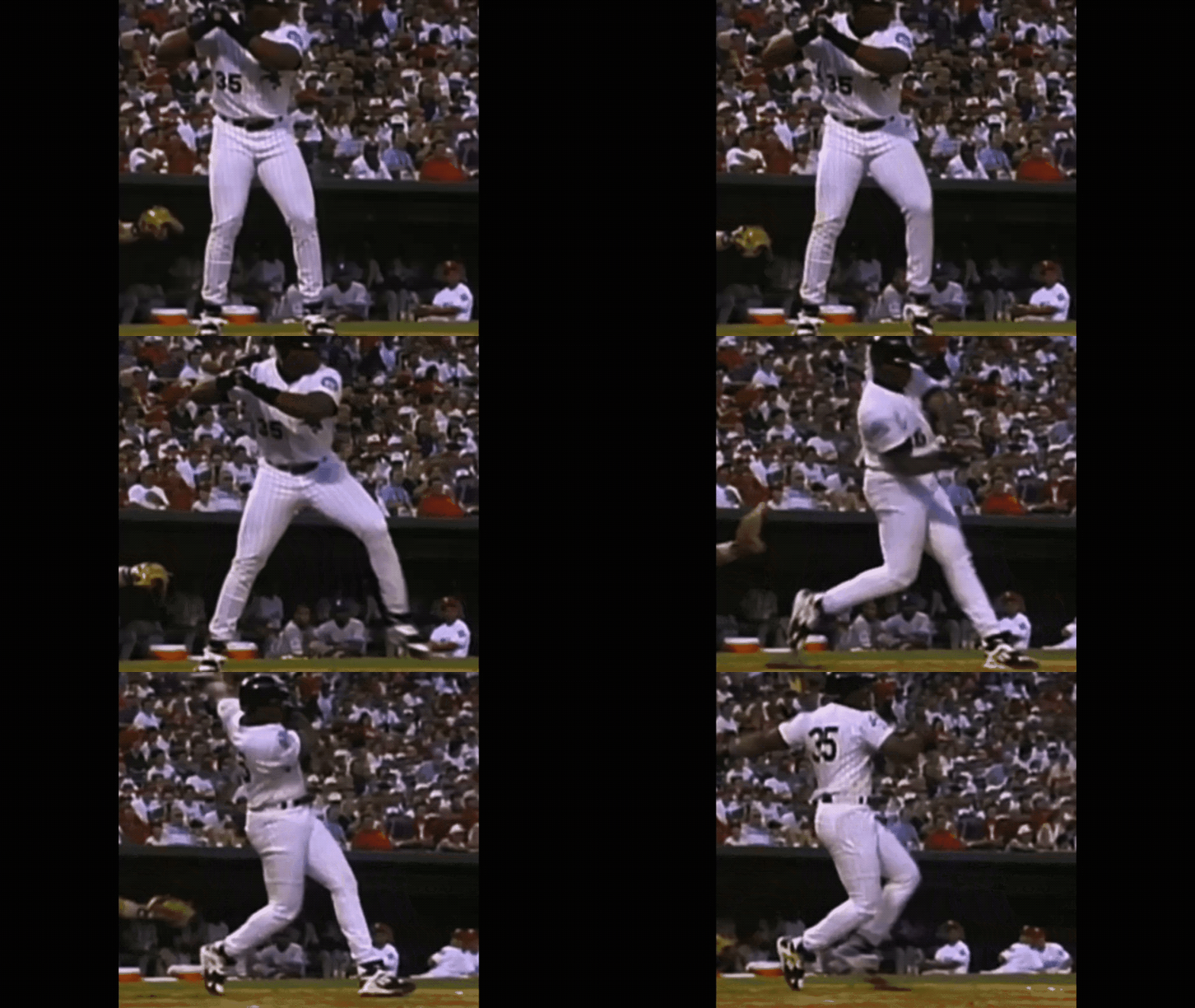
That’s the difference between:
Spinning: the body keeps rotating, the barrel cuts across the zone, and contact quality lives and dies on timing.
Spinning: the body keeps rotating, the barrel cuts across the zone, and contact quality lives and dies on timing.
Directional Rotation: rotation gets captured, braced, and redirected so the barrel stays on-plane longer and drives through the baseball/softball.
When we work with athletes at R2 Training(https://www.r2trainingindy.com), we coach this as a flow: not “just rotate harder,” but rotate with a finish line.
The Energy Flow: Upper Body → Ground (Captured) → Barrel
Here’s the piece most people miss: the ground doesn’t start the energy—it captures it.
The flow looks like this:
1. Upper body starts it: hands load, barrel tips, shoulders coil. That’s the first “spark.”
2. That energy is sent forward and down into the ground as the athlete moves forward and begins to land.
3. The ground captures it (like a wall). If there’s nothing firm to capture it, everything leaks and the swing turns into spin.
4. It works back up to the barrel: legs → hips → torso → hands → barrel.
If you want a simple mental model, it’s a loop: upper body → ground (capture) → barrel.
When that loop is clean, your athlete doesn’t need “more effort.” They need the flow to stay connected so rotation can be stopped on purpose at contact.
Bracing at Contact (The Secret to Power + Consistency)
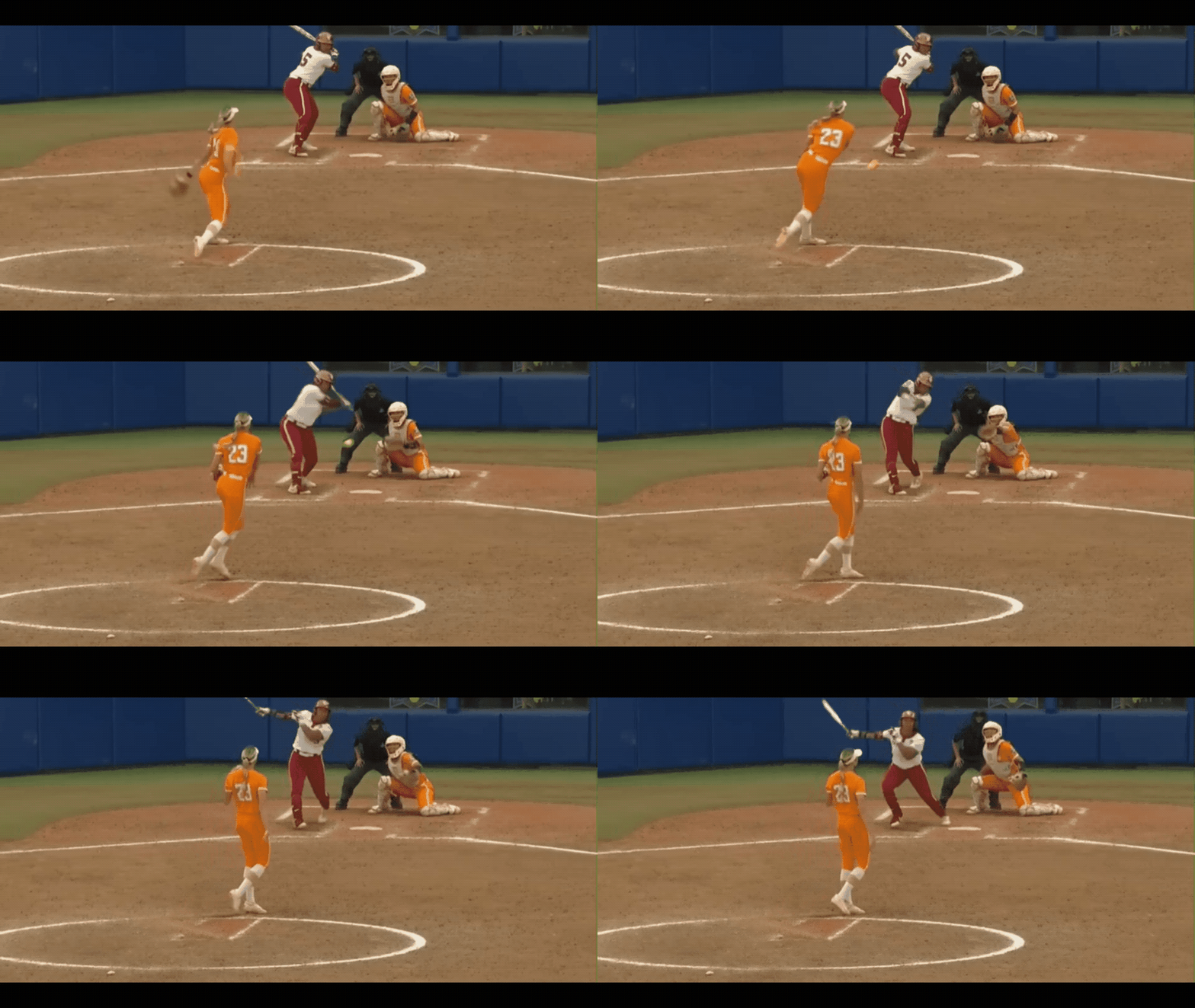
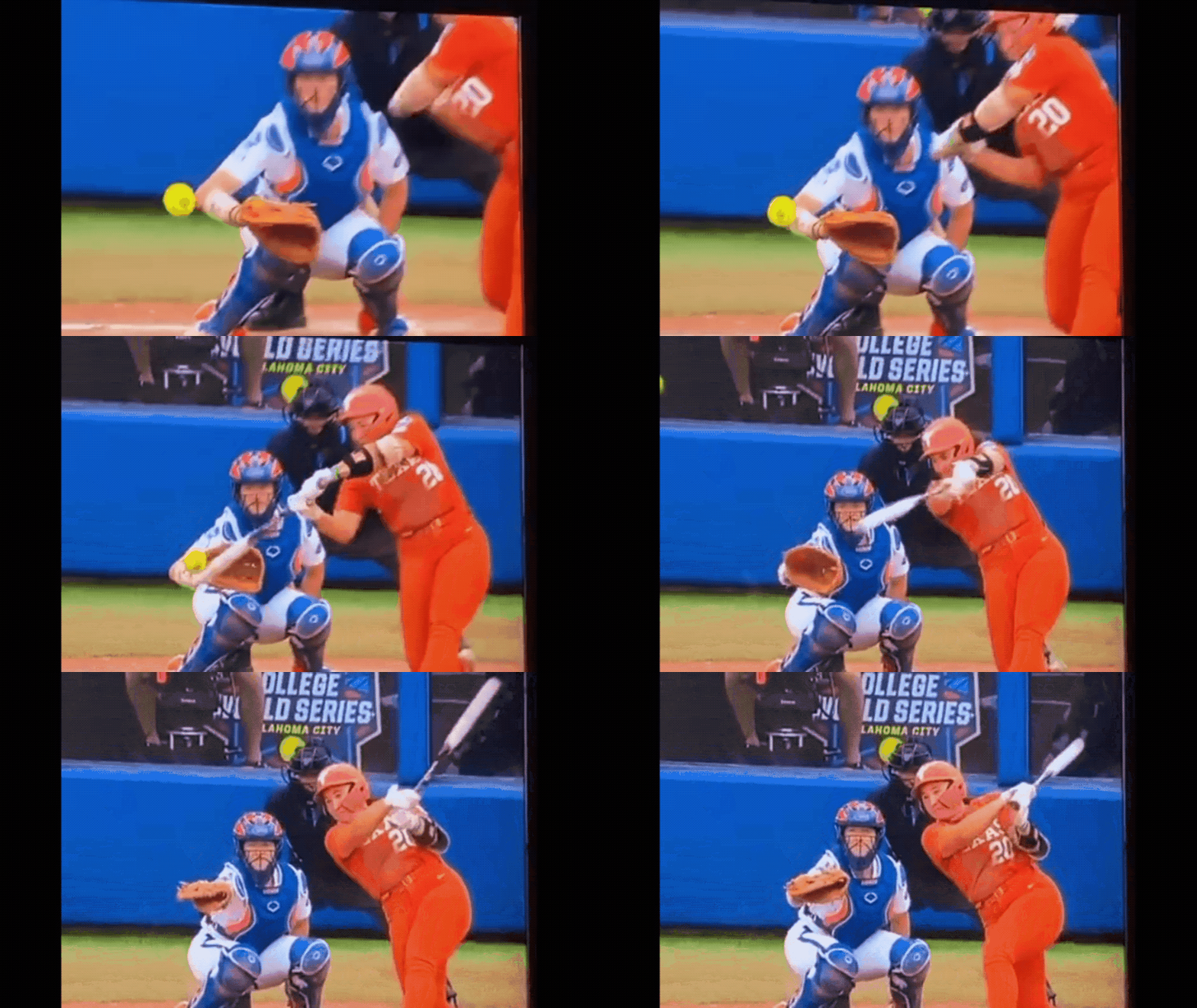
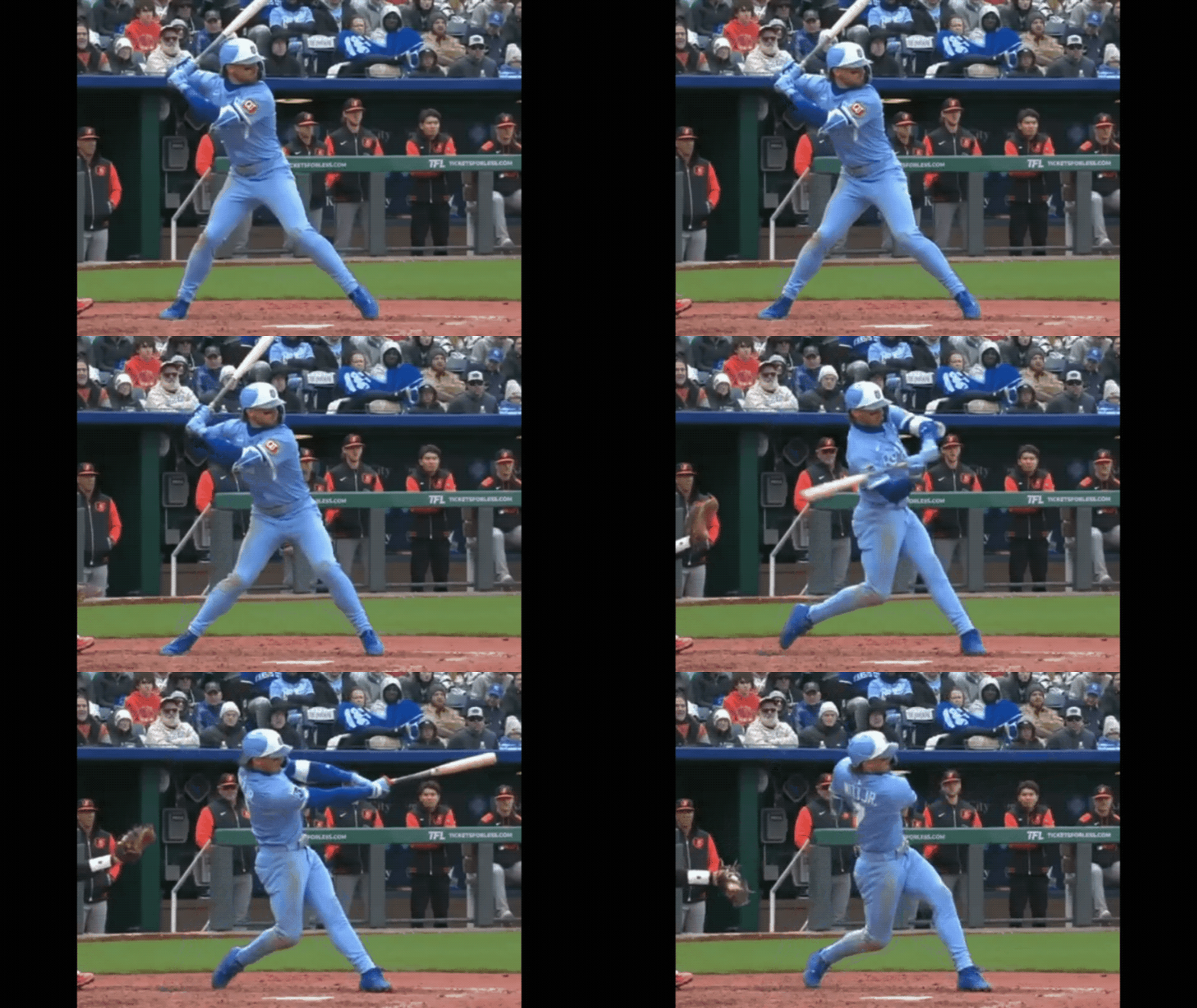
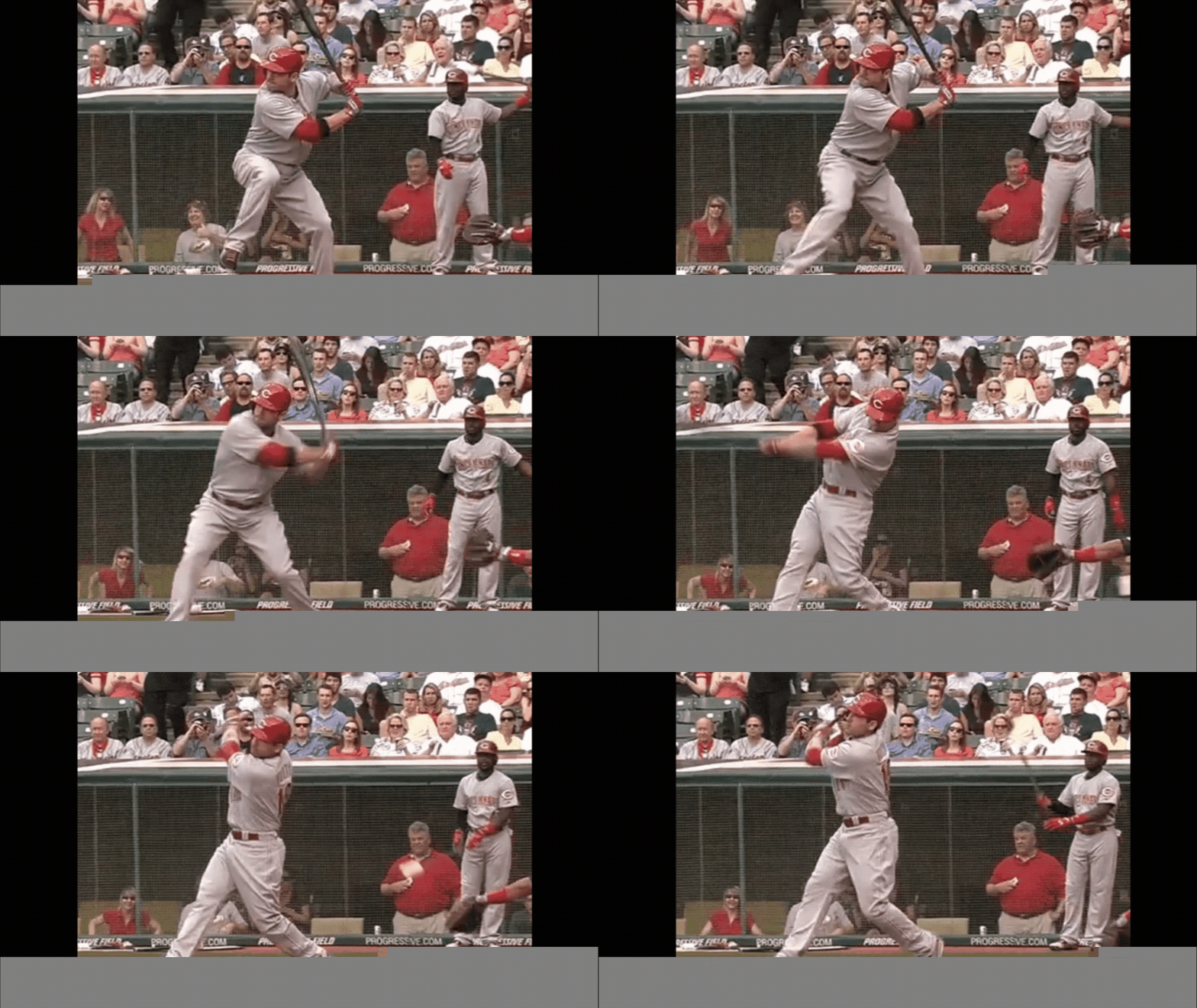
If you only take one thing from this post, take this: bracing at contact is the secret.
Bracing means your athlete creates a firm “front-side stop” at the moment the barrel meets the ball. That doesn’t mean they freeze or get stiff. It means:
* the front leg firms up,
* the front hip holds space,
* the torso doesn’t keep spinning past the ball,
* and the barrel gets delivered through contact instead of across it.
Why does that matter? Because bracing is what turns rotation into something measurable:
* More power (less energy leaks past contact)
* More consistency (barrel stays in the hitting zone longer)
* Better ball flight (more flush, less glancing contact)
What This Means for Your Athlete's Development
If you're working with a younger athlete (7U–12U), this might feel like a lot to digest. And that's okay. At that age, we're not obsessing over perfect mechanics. We're building athletic movement patterns. We want your athlete to feel what it's like to move with intent, to use the ground, to brace and deliver.
For competitive athletes (13U–18U), this is where the details start to matter. We can use video analysis and data from The Futures App to track how well your athlete is bracing, where their energy is going, and whether they're cutting across the ball or driving through it. If we see a scissor kick on exit velo swings but not on game swings, that tells us something. If we see no scissor kick at all, that tells us something else.
The point is this: directional rotation is coachable. It's trainable. And once your athlete understands how to capture energy, brace at contact, and redirect it, everything else in their swing starts to click. Bat speed goes up. Contact quality improves. And suddenly, those hard-hit balls aren't accidents: they're repeatable.
What's Next: Part 2 & 3
So that's the foundation. Directional rotation is about moving with purpose, capturing energy in the ground, and bracing at contact to deliver the barrel through the ball.
In Part 2, we're going to dive into closed stances, striding closed, and scissor kicks: how setting up slightly closed (or striding that way) can actually improve your athlete's ability to rotate directionally. Spoiler: it's not about being "closed off" to the ball. It's about creating the right angles to drive and brace efficiently.
Then in Part 3, we'll break down Finish Types: because how your athlete ends their swing tells us just as much as how they start it. High finish, low finish, one-handed, two-handed: they all mean something, and we’ll show you how the scissor kick can show up as a result of strong flow and a real brace.
If you want to see how we coach these concepts in real time with athletes in our baseball training and softball training programs here in Indianapolis, check out [our training page](https://www.r2trainingindy.com/training) or book a lesson (https://www.r2trainingindy.com/appointment). We'll put your athlete on video, break down their swing frame by frame, and give you a clear plan for what to work on next.
For now, just remember: when your athlete learns to send energy → capture it → brace at contact, the swing stops being “hope it shows up” and starts being repeatable.